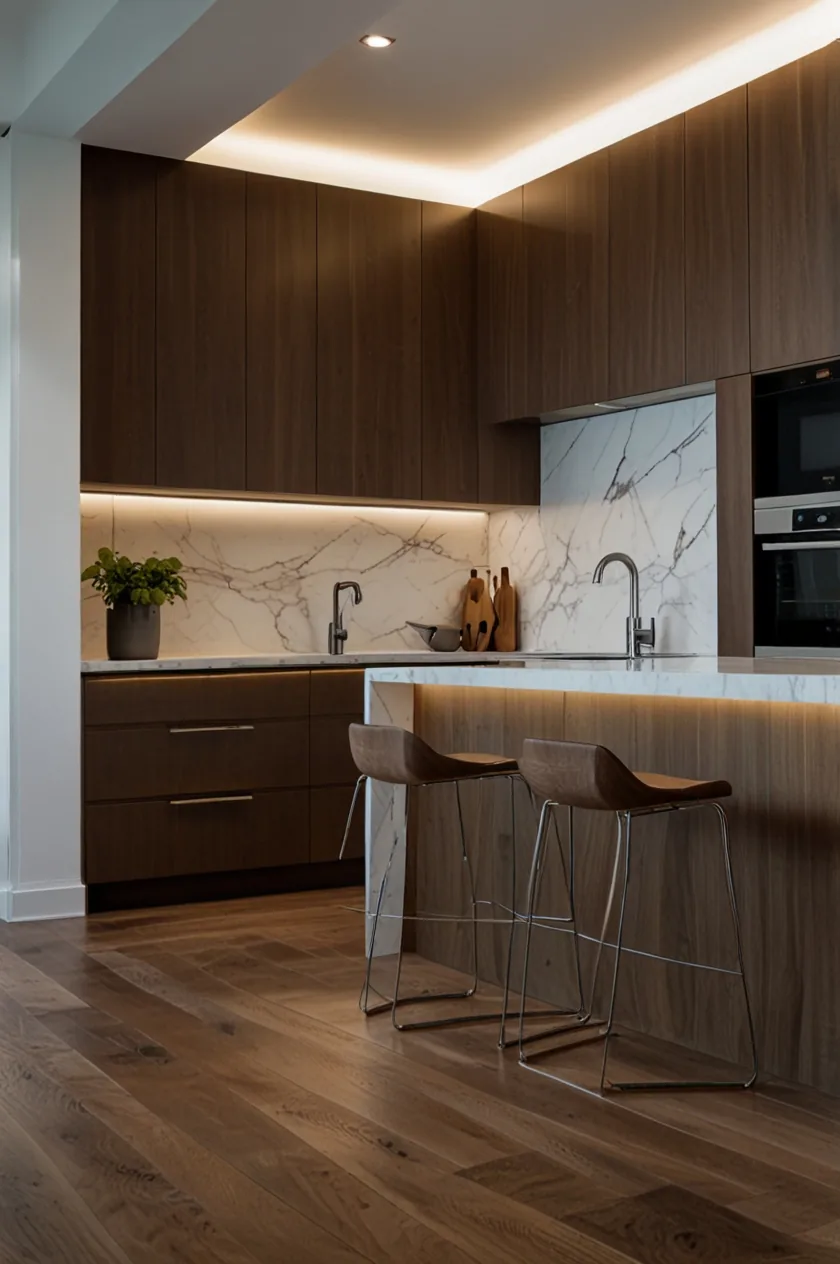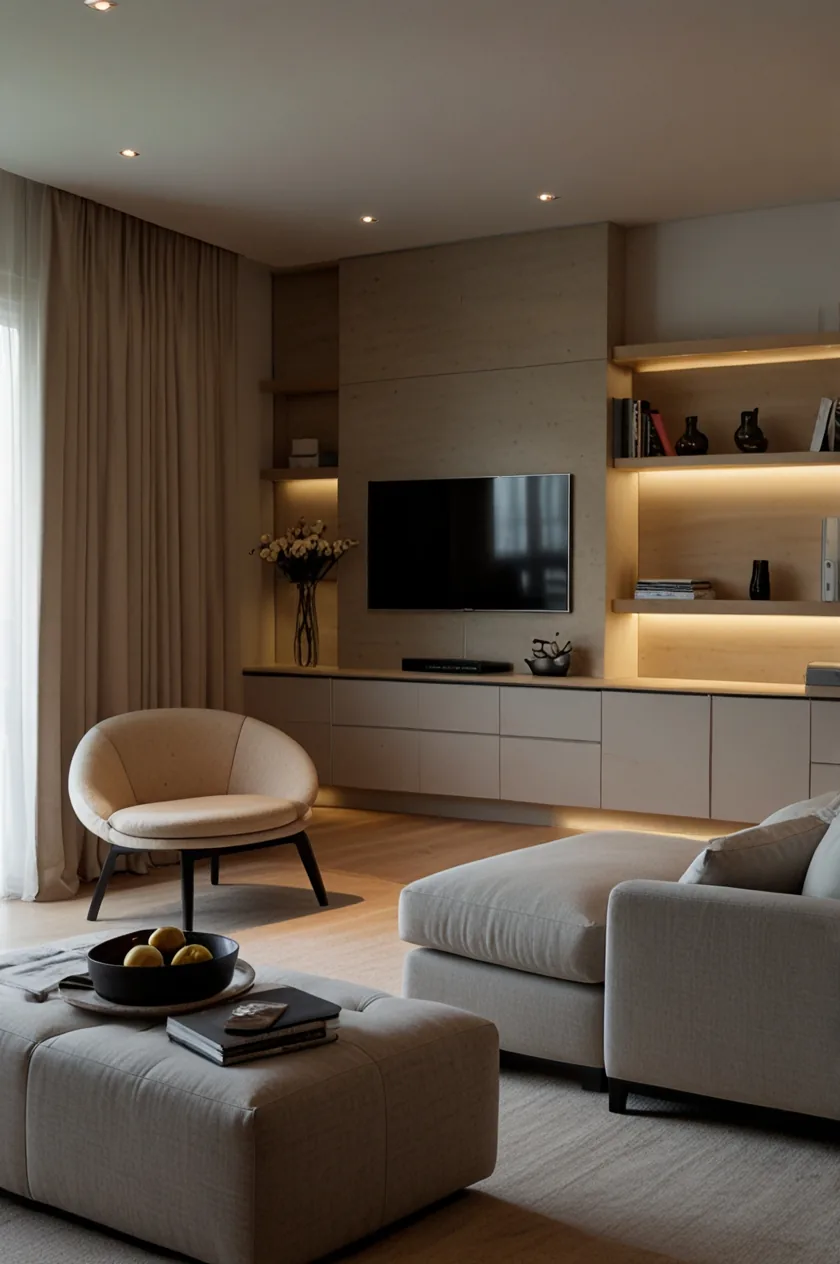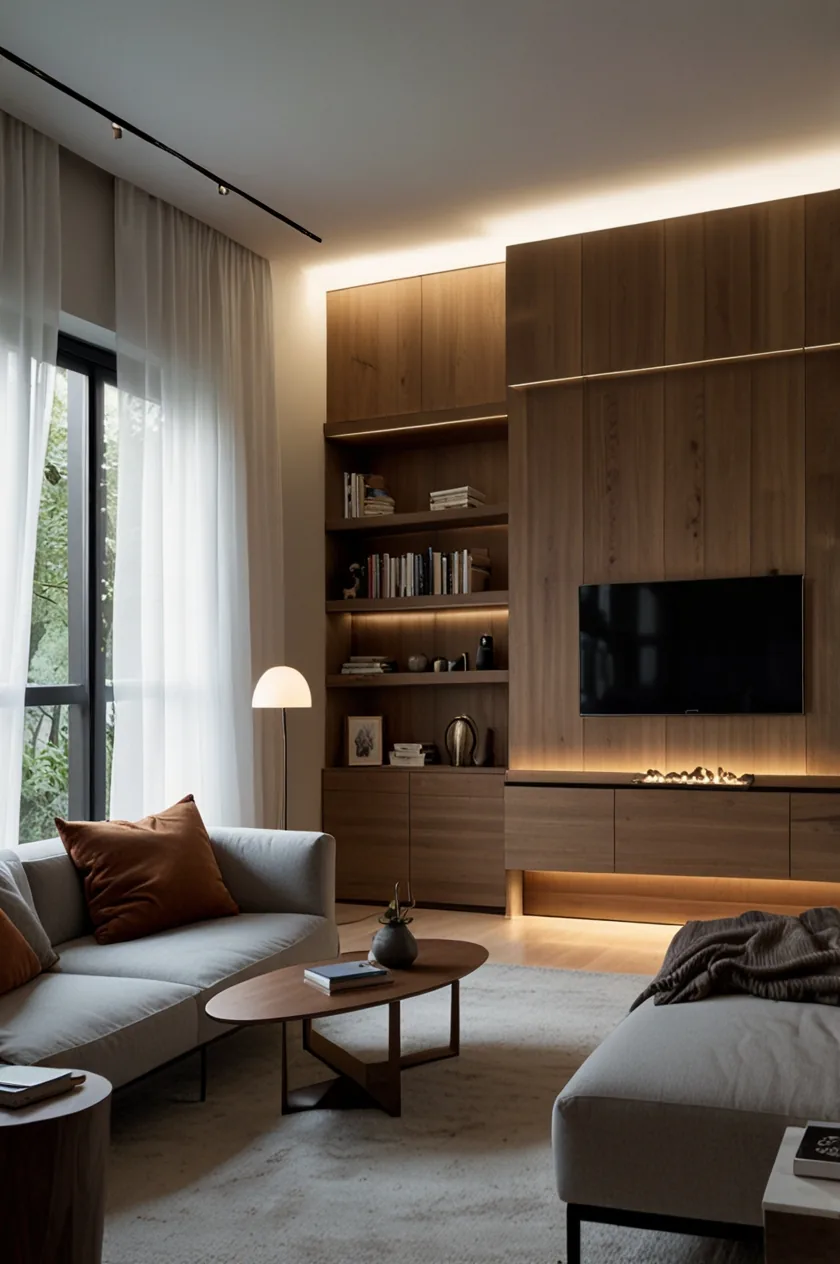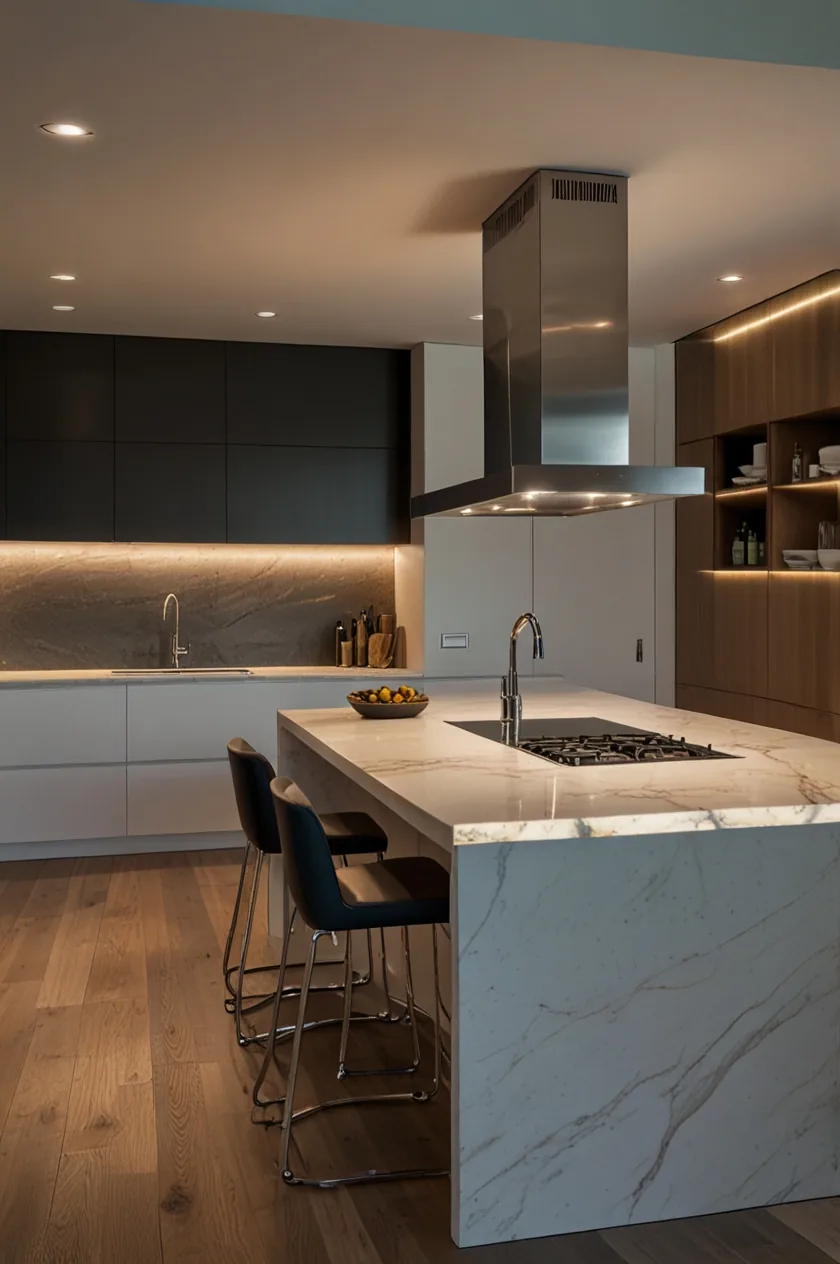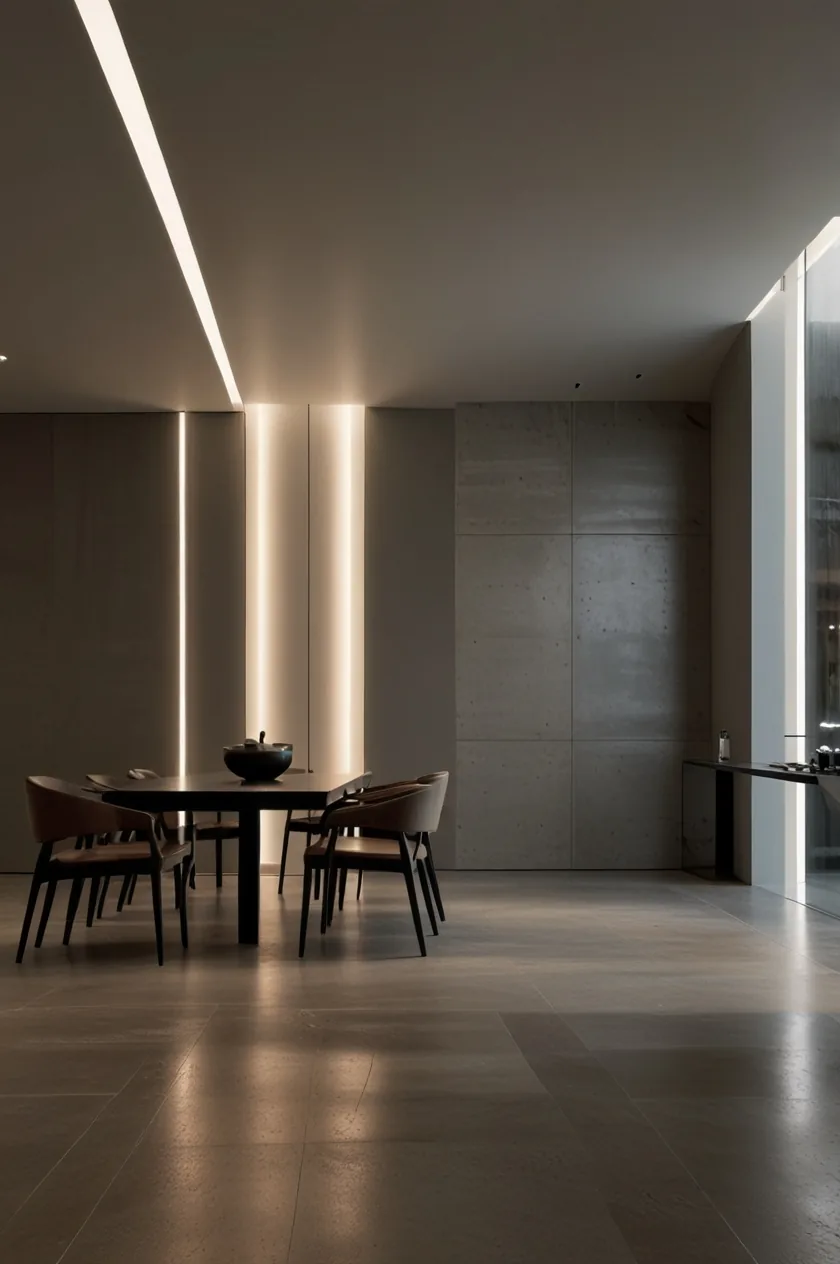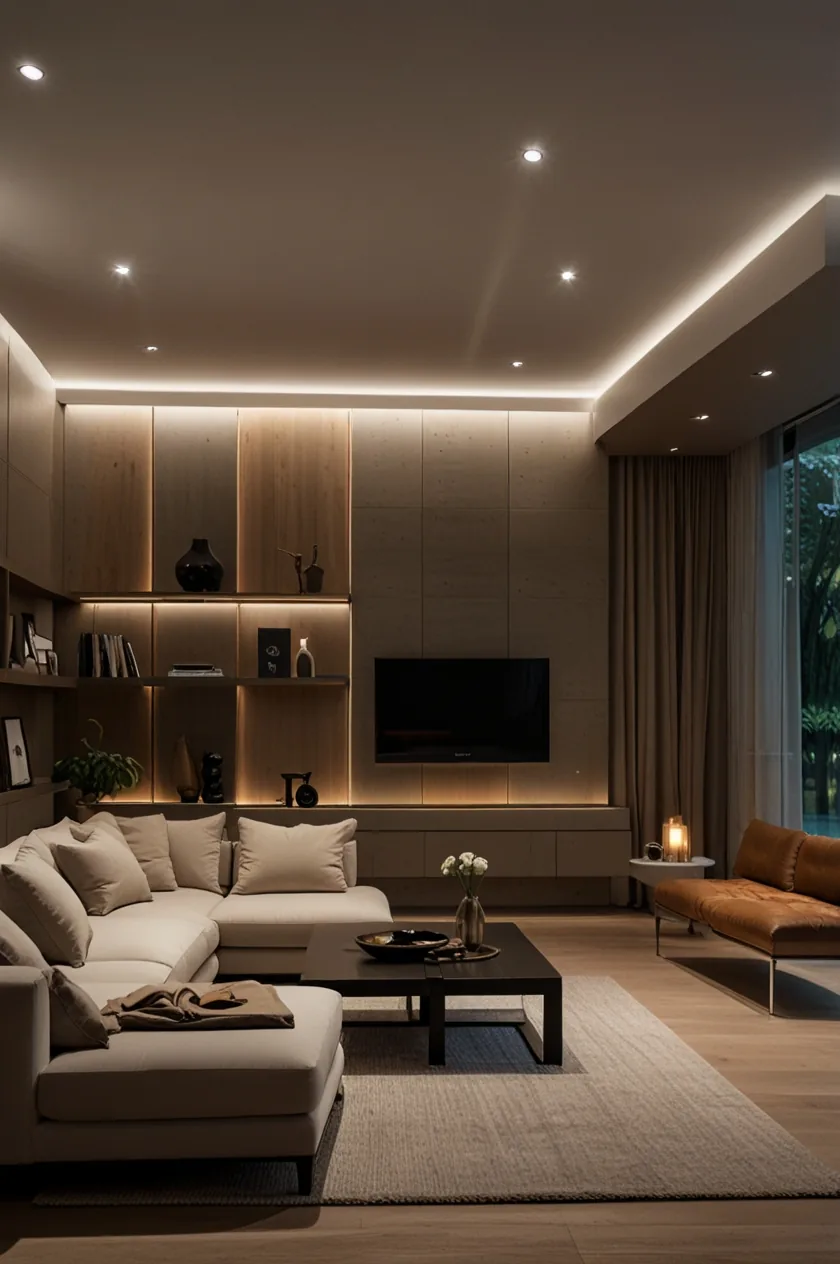
The room faces west over Burrard Inlet, which sounds like a gift until you try to light it. For four hours a day the space needs nothing at all. Then, over about twenty minutes, it needs everything — and by the old arrangement that meant standing up six times.
The original build had each layer on its own dimmer: a cove above the bookcase, three pendants over the dining table, a warm strip under the floating shelf, two picture lights, and the stair nosing. Every one of them was a separate dimmable driver in the ceiling and a separate smart switch on the wall. Eleven devices to run five lights, and none of them agreed with each other on what 40% looked like.
One box behind the shelf
The retrofit removed all eleven. A single non-dimmable 24 V supply now feeds an Trek tucked into the service void behind the bookcase, and the five existing runs land straight on its output terminals. Nothing in the ceiling changed. Nothing in the fixtures changed. The wall plates came off and were patched.
Because every channel is driven from the same reference, the layers finally track each other. Setting the room to 30% actually produces one continuous 30% instead of five interpretations of it — the cove doesn't drop out early, the picture lights don't sit stubbornly bright.
Low end is the whole story
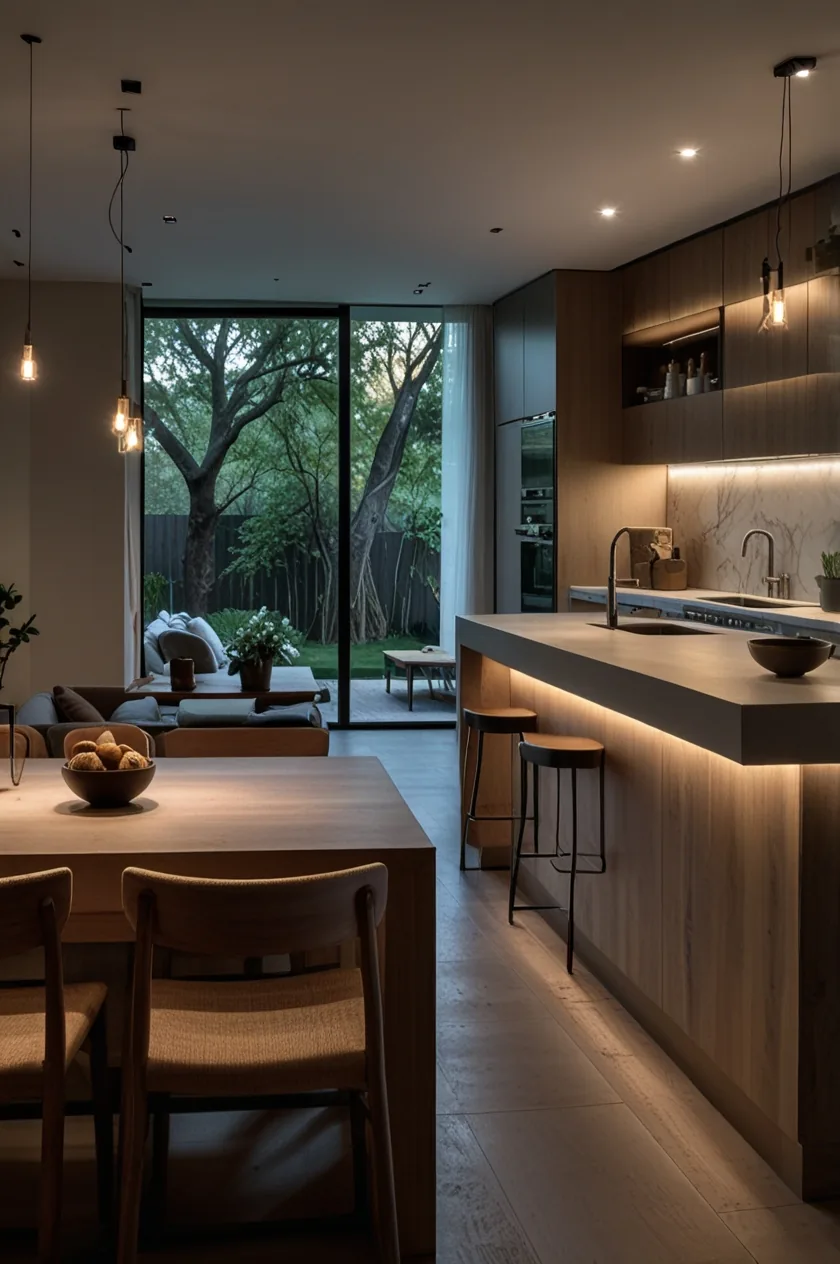
The measurable difference is at the bottom of the curve. The previous drivers gave up somewhere around 8%, snapping off with a visible step. The D05 resolves down to 1% and holds it, which is what makes the sunset ramp work: the room can spend a full twenty minutes between "still daylight" and "lamps on" without a single perceptible stair-step.
One scene handles it. A local schedule on the dimmer walks all five channels down a curve tied to civil twilight, and a single keypad press overrides it for dinner. No hub, no account, no cloud round-trip — if the internet drops, the sun still sets and the room still knows.
What it cost
Five dimmable drivers and five smart dimmers were quoted at just over $1,100 in hardware. The Notrix path — one plain supply plus one D05 — came in at roughly $400, and cut the device count from ten to two. The saved afternoon of labour wasn't in the quote.