← All stories
Residential · Vancouver, BC

A west-coast living room that dims with the sun

Five circuits, one scene. The Mirandas traded six wall switches and a drawer of remotes for a single evening preset that follows the light off the water.

SpaceLiving room + dining, 640 sq ft
Hardware1 × Trek, 24 V non-dimmable supply
Loads5 — cove, pendants, shelf, art, stair
Install timeOne afternoon
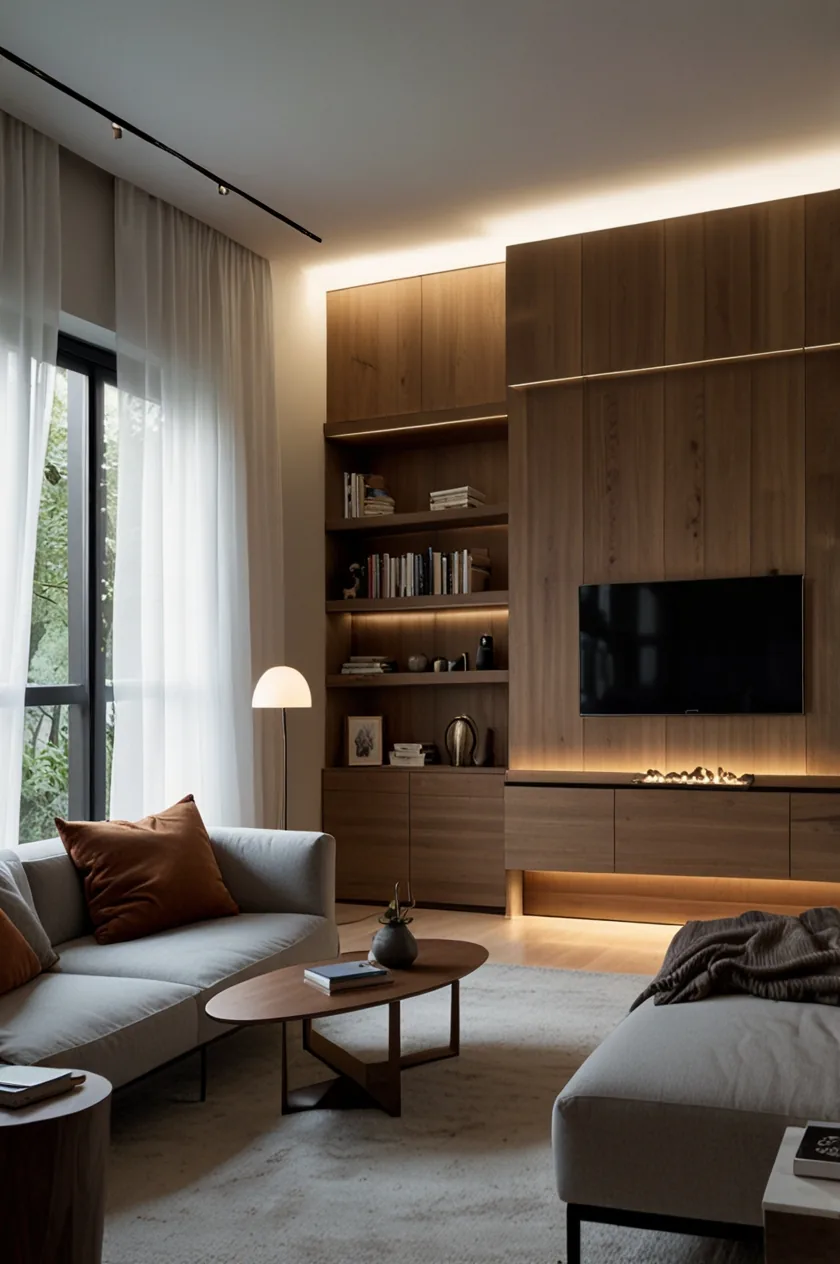
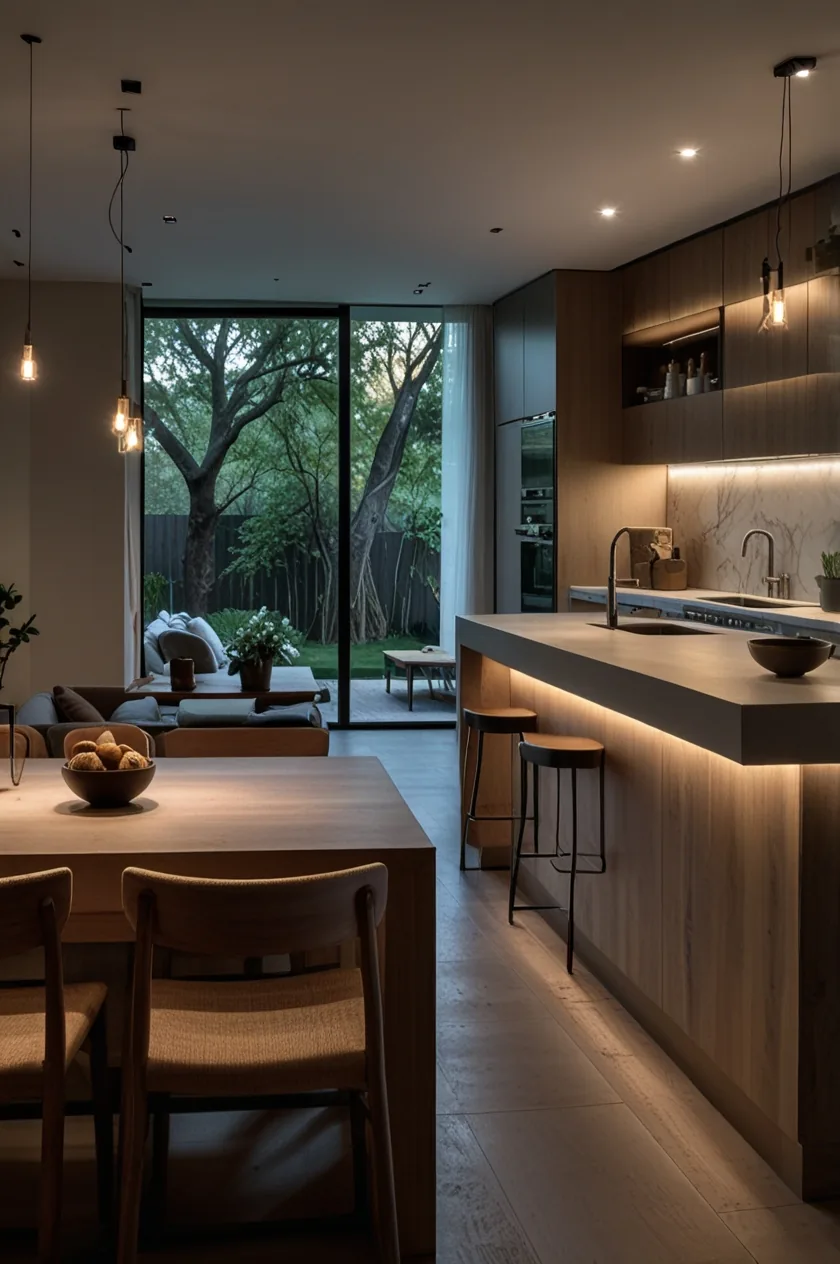
Evening light in a west-coast living room

The room faces west over Burrard Inlet, which sounds like a gift until you try to light it. For four hours a day the space needs nothing at all. Then, over about twenty minutes, it needs everything — and by the old arrangement that meant standing up six times.

The original build had each layer on its own dimmer: a cove above the bookcase, three pendants over the dining table, a warm strip under the floating shelf, two picture lights, and the stair nosing. Every one of them was a separate dimmable driver in the ceiling and a separate smart switch on the wall. Eleven devices to run five lights, and none of them agreed with each other on what 40% looked like.

One box behind the shelf

The retrofit removed all eleven. A single non-dimmable 24 V supply now feeds an Trek tucked into the service void behind the bookcase, and the five existing runs land straight on its output terminals. Nothing in the ceiling changed. Nothing in the fixtures changed. The wall plates came off and were patched.

Because every channel is driven from the same reference, the layers finally track each other. Setting the room to 30% actually produces one continuous 30% instead of five interpretations of it — the cove doesn't drop out early, the picture lights don't sit stubbornly bright.
The first evening we ran the sunset scene, nobody in the room noticed anything happen. That was the point.Elena Miranda, homeowner
Dining pendants at low level
Pendants held at 6% — below where the old drivers would flicker out

Low end is the whole story

The measurable difference is at the bottom of the curve. The previous drivers gave up somewhere around 8%, snapping off with a visible step. The D05 resolves down to 1% and holds it, which is what makes the sunset ramp work: the room can spend a full twenty minutes between "still daylight" and "lamps on" without a single perceptible stair-step.

One scene handles it. A local schedule on the dimmer walks all five channels down a curve tied to civil twilight, and a single keypad press overrides it for dinner. No hub, no account, no cloud round-trip — if the internet drops, the sun still sets and the room still knows.

What it cost

Five dimmable drivers and five smart dimmers were quoted at just over $1,100 in hardware. The Notrix path — one plain supply plus one D05 — came in at roughly $400, and cut the device count from ten to two. The saved afternoon of labour wasn't in the quote.
← All stories
Design studio · Toronto, ON

Layered light for a minimalist kitchen

Fold Studio spent three years cutting things out of their kitchens. Here is why the lighting control was the last thing to go — and what replaced it.

PracticeFold Studio, interior architecture
Hardware1 × Vort per kitchen, standard specification
Loads8 typical — task, cove, toe, island, pantry
SinceSpecified on 14 projects
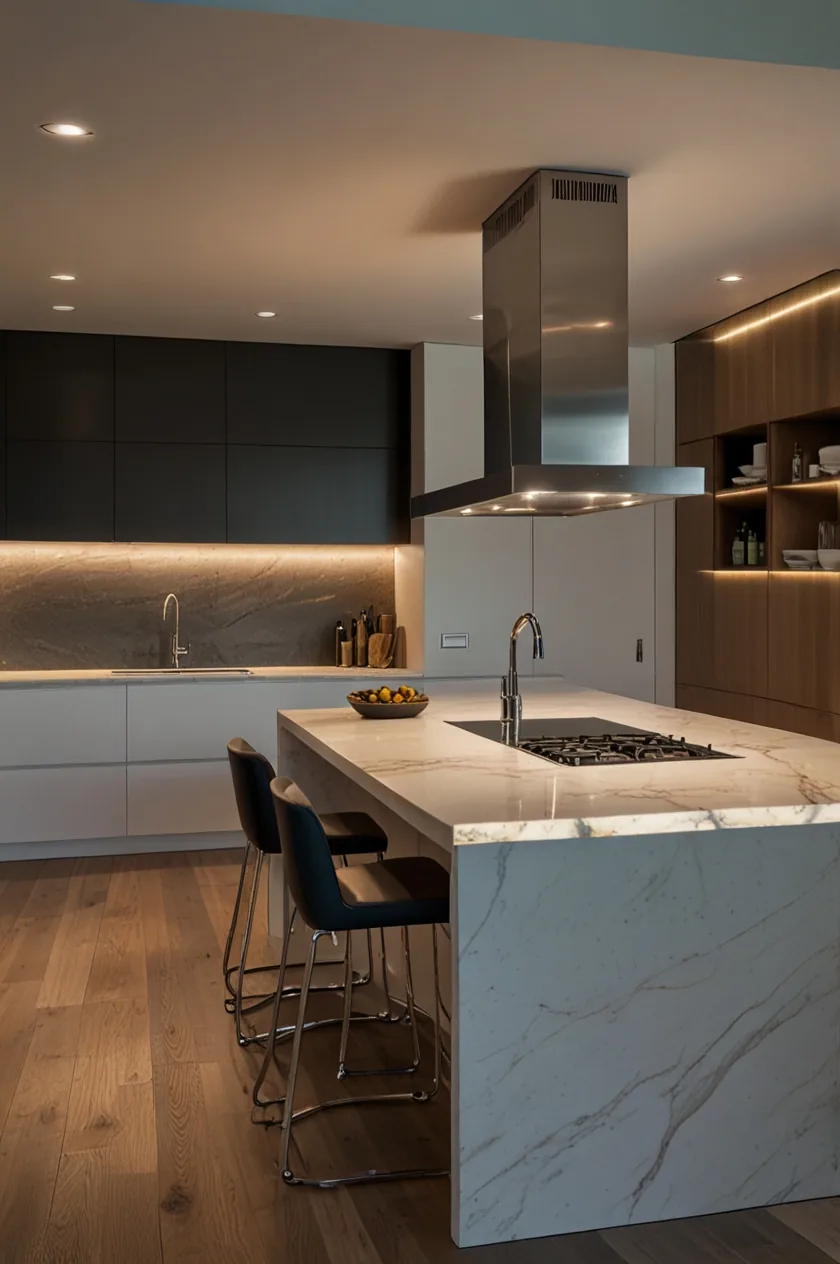
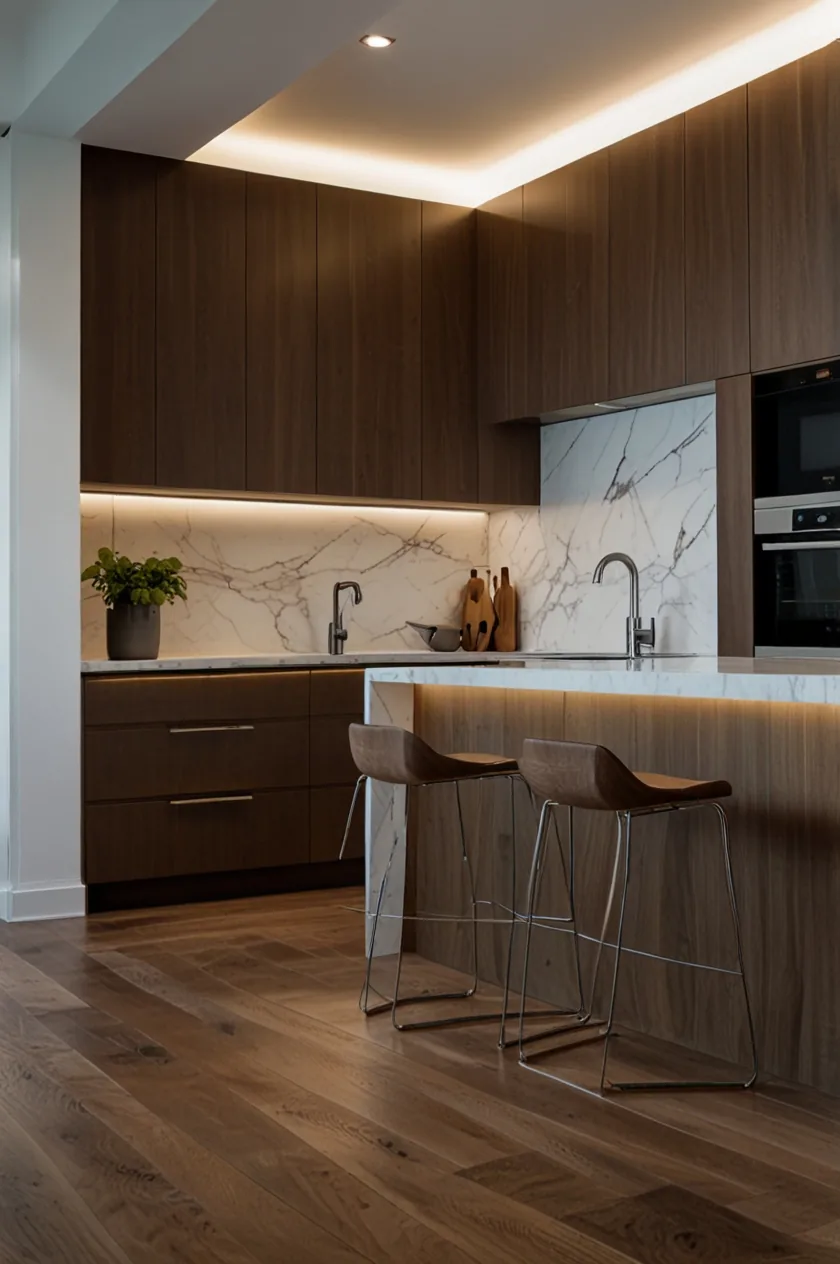
Minimalist kitchen with layered light

Marble does not forgive lighting. Push a strip too hard against honed stone and the veining flattens; pull it too far back and the counter reads grey. Fold's kitchens live in a narrow band between those two failures, and for years that band was defended by hand.

"We'd commission a kitchen with a laptop and a colour meter, find the level that made the stone sit right, and then write it on a piece of tape inside the cabinet," says Priya Raman, who runs the studio's technical side. "Six months later a driver would be swapped under warranty and the whole thing was gone."

Resolution as a material decision

The studio's fix was to stop treating dimming as a switch problem. Eight channels — under-cabinet task, two cove runs, toe kick, island pendants, pantry, shelf, and the sink downlight — all land on one Vort in the service cupboard. Each holds its own calibrated ceiling, so "100%" on the island means the level Priya set, not the level the driver can reach.

Sixteen-bit dimming sounds like a spec-sheet number until you watch a walnut door go from warm to muddy across two steps of an eight-bit curve.Priya Raman, Fold Studio
Counter light detailCabinet interior light
Task and cove layers, balanced against honed stone and oiled walnut

Mixed loads on one chassis

The kitchens are not tidy electrically. Tunable-white tape over the counters, fixed 2700 K in the toe kick, a small RGBW wash in the glass pantry, and 24 V pendants that arrived at 12 V on two projects. Previously that meant three driver families and a coordination call for every substitution.

Now it's one chassis with mixed channel assignments and one non-dimmable supply sized to the sum. When a fixture changes late — and it always does — the change is a channel re-map, not a re-order.

A specification, not a one-off

Fold has since made it a standard note: one D10 per kitchen, scenes documented in the handover binder, and every level recorded as a number rather than a piece of tape. "The client gets four buttons," Raman says. "Everything we argued about for three weeks is behind them."

← All stories
Renovation · Ottawa, ON

Retrofitting a 1970s home, one channel at a time

Plaster walls, aluminium-era wiring, and a homeowner with no appetite for drywall dust. Ten channels brought a whole floor onto the mesh over one weekend.

Property1974 side-split, main floor
Hardware1 × Vort + 1 × Aurora
Loads12 across five rooms
DowntimeTwo days, no drywall opened
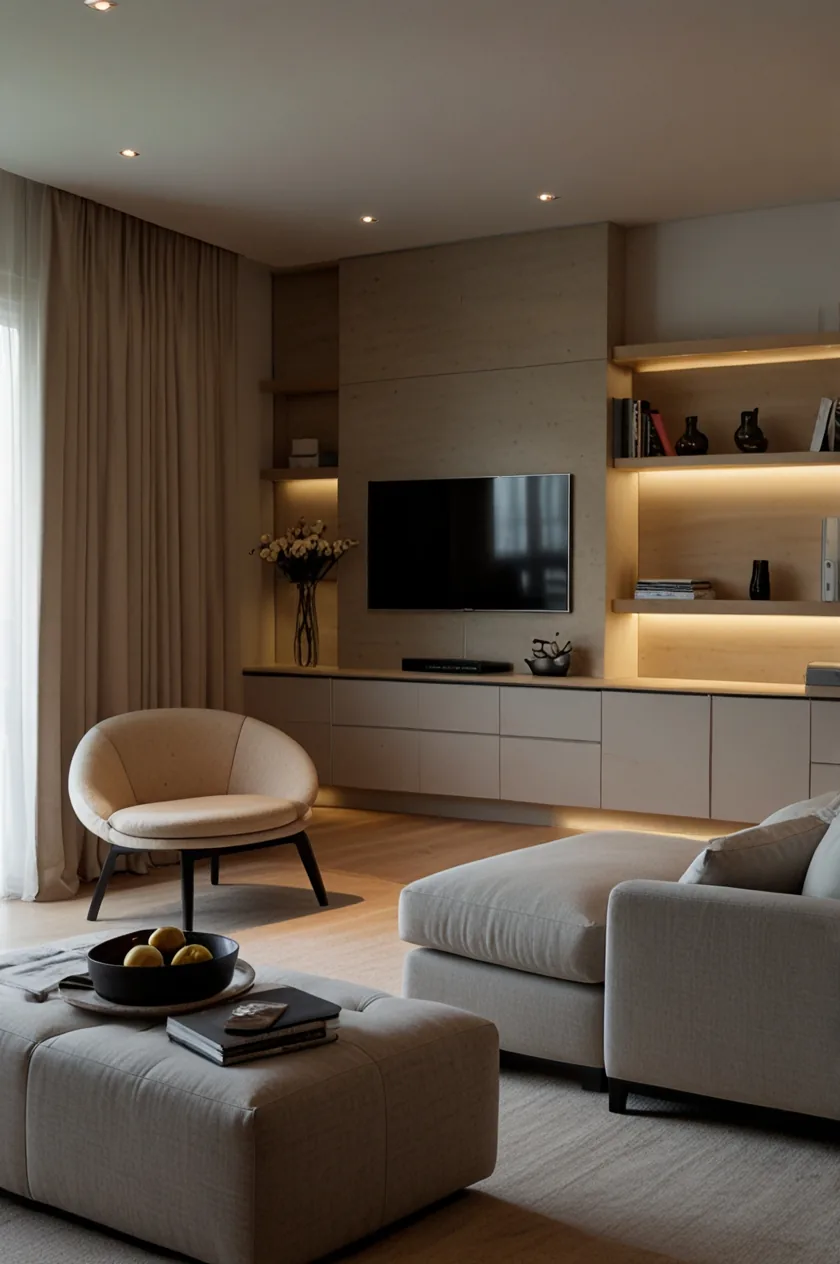
Renovated 1970s interior at dusk

The quote that started this project was for $14,000 and included the phrase "open and patch throughout." The homeowner, a retired structural engineer named Dale, read it twice and went looking for another way to get dimming into a house whose walls he had no intention of opening.

The constraint was not the lighting. It was the switch legs: single runs, no neutral at most boxes, and a mix of 1974 aluminium and 1990s copper pigtails. Smart switches were out — every one of them wanted a neutral, and half wanted a load minimum the new LED fixtures couldn't meet.

Move the intelligence to the fixtures

The approach inverted the usual retrofit. Instead of making twelve wall boxes smart, the wall boxes were turned into plain permanently-live feeds, and control moved to two low-voltage dimmers mounted in the basement mechanical room: an Vort for the living, dining, hall and kitchen, and an Aurora for the two bedrooms. Low-voltage runs were pulled through the existing switch conduits — no box that wasn't already there, no plaster cut.

Basement mechanical room with dimmers mounted
Both chassis and one supply, mounted on a plywood back-board beside the panel
Twenty-four boxes of hardware became four. I could put my hand on every dimmer in the house without a ladder.Dale Fournier, homeowner

Why two chassis, not three

Twelve loads is an awkward number. Three D05s would have covered it with three channels spare; a D10 plus a D03 covers it with one spare and costs less. That mix — cheapest combination of chassis that still covers the count — is what the calculator solves for, and it changed the order on this job by about $180.

Both chassis share their own non-dimmable supplies, sized to the connected watts on each. Against the traditional path — twelve dimmable drivers plus twelve smart switches — the bill of materials came down by a little over $2,000, before the drywall work that never happened.

Living with it

The wall plates were replaced with low-voltage keypads in the same footprint, so the house doesn't announce the change. Scenes are local; the mesh handles the rest. Dale's summary, six months in: "The only thing I've done to it is add a scene for reading. It hasn't asked me for anything."